Keukenhof, Netherlands: A Complete Guide to the Garden of Europe
Seven million bulbs, eight weeks a year — 2027 dates, verified prices, and exactly when the tulips peak.
GeoParallaxFilmed & written on locationKeukenhof: The Ultimate Guide to the World's Most Beautiful Tulip Garden
Keukenhof, the Garden of Europe — its pavilions, the historic windmill, the ornamental lake and seven million spring bulbs, plus the bulb fields, Kasteel Keukenhof and Zaanse Schans beyond the gates. Filmed on location in the Netherlands.
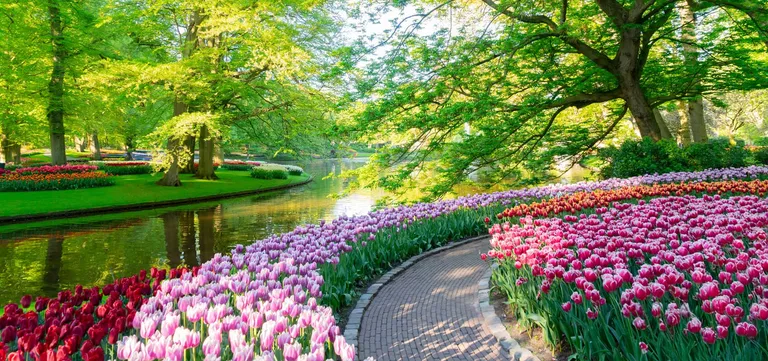
Keukenhof is a 32-hectare spring garden in Lisse, in the Dutch bulb region between Amsterdam and The Hague, where around seven million tulips, daffodils and hyacinths are planted by hand each autumn to flower for roughly eight weeks. Known as the Garden of Europe, it opens only for the Dutch spring — 18 March to 9 May in 2027 — and closes again for the rest of the year. Filming it for GeoParallax, we learned the thing the photographs never tell you: which week you come matters more than anything else you decide.
Below: the 2027 dates, what it costs, when the tulips actually peak, how to get here and how to dodge the coaches — then the garden itself pavilion by pavilion, and the bulb fields and castle beyond the gates.
Table of Contents
- When is Keukenhof open in 2027?
- When do the tulips actually peak?
- What does Keukenhof cost? (2026 prices, verified)
- How do you get to Keukenhof from Amsterdam?
- How long do you need at Keukenhof?
- How do you avoid the crowds?
- Finding your way: the Keukenhof map
- 1. Oranje Nassau Pavilion
- 2. Willem-Alexander Pavilion
- 3. The historic windmill
- 4. The central garden
- 5. Beatrix Pavilion
- 6. Wilhelmina Pavilion and the lake
- 7. Juliana Pavilion and Tulpomania
- Beyond the garden: bulb fields, a castle and Zaanse Schans
- Frequently Asked Questions
- Useful Links & Resources
- Our Photography Portfolio
When is Keukenhof open in 2027?
Keukenhof’s 2027 season runs from 18 March to 9 May — eight weeks, and then the gates close for another year. The garden opens daily at 08:00 and closes at 19:00, with the last entry at 18:15.
That short window is the whole character of the place. Seven million bulbs go into the ground by hand each autumn, timed so that something is always flowering across those eight weeks, and the garden is dismantled and replanted every year. It also means the dates shift slightly each season — always roughly late March to mid-May — so confirm against the official site before booking flights around it.

When do the tulips actually peak?
This is the question that decides your trip, and the honest answer is that tulips peak in the middle to late part of April in most years. But the garden is planted so that the eight weeks each look different, and if you’re travelling for a particular flower it’s worth knowing what’s out when:
| When | What’s flowering |
|---|---|
| Mid–late March | Crocuses, early daffodils and hyacinths; the beds are colourful but tulip-light. The first tulips open right at the end of the month |
| Early April | Daffodils and hyacinths at their fullest, early tulips spreading through the beds; the surrounding bulb fields begin to colour |
| Mid–late April | Peak tulips — the garden and the fields outside both at their most spectacular, and the busiest weeks of the season |
| Early May | Late-flowering tulips and alliums, the bulb fields largely cut; indoors, the Lily Show closes the season |
Bloom follows the weather, not the calendar — a warm March pulls everything forward, a cold one delays it. Keukenhof publishes a flowering report during the season; check it in the week before you travel rather than relying on any guide, including this one.
One thing our filming taught us: the bulb fields outside the garden and the beds inside it don’t peak together. The fields are commercial crops, cut once the bloom is done, so they can be bare while the garden is still magnificent. If the fields are what you’re picturing, aim for the second half of April.
What does Keukenhof cost? (2026 prices, verified)
Prices for the 2027 season go on sale in mid-October 2026 and are usually close to the previous year’s. These are the 2026 figures, which are the right ones to budget with until the new season opens:
| What | 2026 price | Notes |
|---|---|---|
| Adult (18+) | €21.50 | 2027 tickets on sale from mid-October 2026 |
| Child (4–17) | €10 | Under 4 free |
| Parking | €10–15 per day | Cheaper booked online with your ticket than at the gate |
| Combi-ticket — Amsterdam RAI | ±€38.50 | Entry plus return on Express bus 852 |
| Combi-ticket — Leiden / Haarlem / Hoofddorp | ±€33.50 | Entry plus return bus (854 / 850 / 859) |
| Schiphol shuttle plus entry | from ±€42.50 | Direct shuttle service |
| Bus fare only (without entry) | €12.80–18.20 | If you already hold a garden ticket |
| Whisper boat through the bulb fields | Price on the day | ±45 minutes, departs near the windmill |
| Kasteel Keukenhof grounds | Free | Six-minute walk from the garden |
Prices verified against official and operator listings, August 2026, and describe the 2026 season. Keukenhof is entirely cashless — cards only throughout, with a single ATM in the Willem-Alexander Pavilion.
How do you get to Keukenhof from Amsterdam?
Keukenhof sits in Lisse, about 40 km southwest of Amsterdam and closer still to Schiphol. The Keukenhof Express buses run only during the season and drop you at the entrance, which makes them simpler than any train-and-transfer combination.
| From | Distance | By car | Keukenhof Express |
|---|---|---|---|
| Amsterdam (RAI) | ±40 km | ±45 min | Bus 852 · ±35 min |
| Schiphol Airport | ±25 km | ±25 min | Direct shuttle · ±30 min |
| Hoofddorp | ±20 km | ±20 min | Bus 859 · ±25 min |
| Leiden Centraal | ±15 km | ±20 min | Bus 854 · ±25 min |
| Haarlem | ±30 km | ±35 min | Bus 850 · ±40 min |
| Rotterdam | ±60 km | ±50 min | Train to Leiden, then bus 854 |
| The Hague | ±40 km | ±40 min | Train to Leiden, then bus 854 |
| Giethoorn | ±150 km | ±1 h 45 | — |
Approximate, without traffic. Buy the combi-ticket if you’re coming by bus — it bundles entry with the return fare and guarantees admission on days that sell out.
By car gives you the bulb region afterwards, which is half the reason to come; the A4 brings you close and parking is ample, but Lisse traffic is genuinely heavy on peak-season weekends, so arrive early. By bike is the local’s answer for the fields — bicycles aren’t allowed inside the garden, but rental near the entrance or in Leiden, Haarlem or Noordwijk turns the surrounding farms into the best afternoon of the trip.
How long do you need at Keukenhof?
Three to five hours covers the garden properly: the seven pavilions and features below, the windmill, the ornamental lake and the main beds, with time to sit down twice. The park is 32 hectares and the paths wind, so it walks longer than it looks on the map.
Make it a full day if you want the whole bulb-region experience — the whisper boat through the fields behind the garden, an hour cycling the flower farms outside, or the short walk to Kasteel Keukenhof. Most visitors arrive at opening and leave after lunch, which is both the most pleasant rhythm and the one that dodges the worst of the crowds.
How do you avoid the crowds?
Keukenhof receives well over a million visitors inside eight weeks, and the middle of the day is when they’re all there. Three decisions fix it:
- Pick your day: Monday, Tuesday and Wednesday are consistently the quietest; weekends are the busiest by a wide margin.
- Pick your hour: arrive at 08:00 when the gates open, or after 16:00 as the coaches leave. The first hour is also the best light of the day for photographs.
- Avoid the fixed peaks: the Flower Parade weekend (17–18 April 2027), Easter, Dutch school holidays and King’s Day on 27 April are the year’s sell-out dates and book out months ahead.
Finding your way: the Keukenhof map
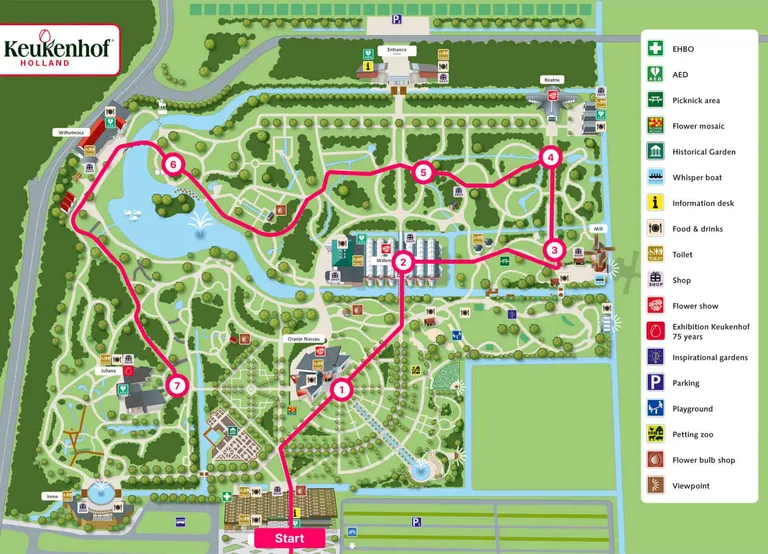
Thirty-two hectares of winding paths is a lot to navigate on instinct, and the most common regret we hear is missing a pavilion entirely. Pick up the free park map at the entrance, or study the layout before you arrive: the pavilions ring the central gardens, the windmill sits toward the back near the bulb fields, and the ornamental lake anchors the middle.
1. Oranje Nassau Pavilion
The first pavilion you meet, just past the main entrance, and the one that rewards repeat visits: its flower shows change every week of the season. One week is roses, the next daffodils or summer blooms, each arranged by Dutch florists into displays that have nothing to do with the tulips outside. If you’re visiting more than once in a season, this is the room that will have changed.
Check the official site for the current week’s show before you go, and come early or late — it’s compact and fills quickly. Jacoba’s Kitchen here also carries the widest vegetarian and vegan range in the park.
2. Willem-Alexander Pavilion
Five minutes on, the largest pavilion in the park, named for the Dutch king, and the one that saves a rainy day. It runs displays all season — tulips in every form the Netherlands grows them, amaryllis, potted plants — closing with the spectacular Lily Show in the season’s final weeks.
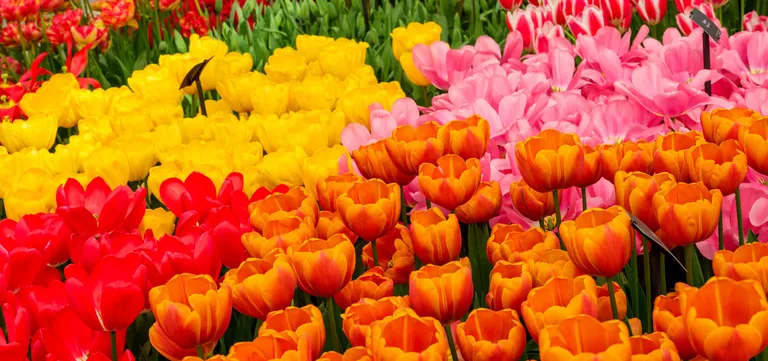
It’s also the practical heart of the park: food, seating, shelter, and the only ATM at Keukenhof — worth knowing in a garden that otherwise takes cards exclusively.
3. The historic windmill
The most photographed structure in the garden, and older than the garden itself: built in Groningen in 1892 and moved here in 1957. Climb the stairs inside for the view that makes the trip — the garden on one side and, on the other, the bulb fields running to the horizon in stripes of colour. In peak weeks it’s the single best vantage point in the Netherlands for understanding what a bulb region actually looks like.
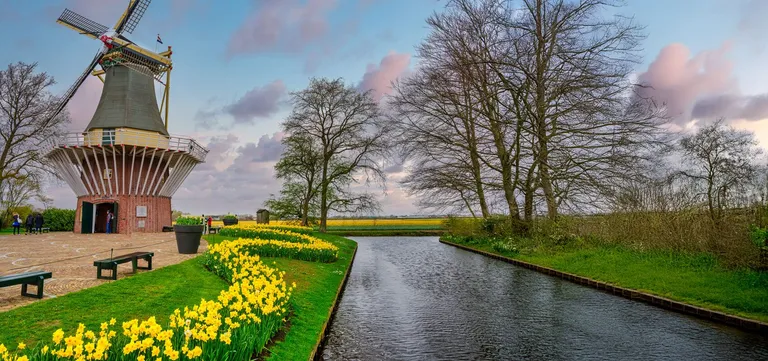
The whisper boat tours depart nearby, gliding out through those same fields, and the picnic tables and Inspirational Gardens around it make this the natural place to stop for an hour. One caution: the viewpoint is reached by stairs and isn’t wheelchair-accessible, though the paths to it are.
4. The central garden
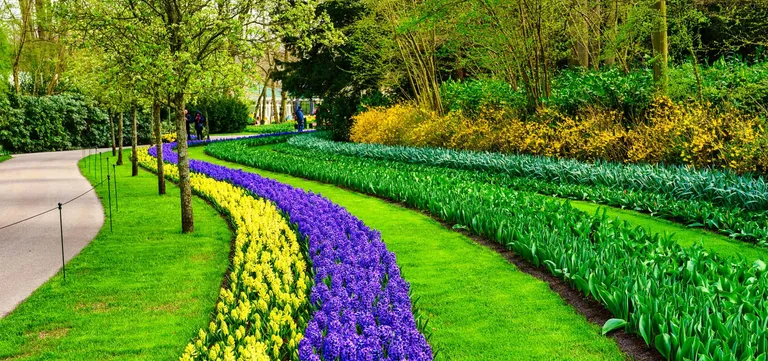
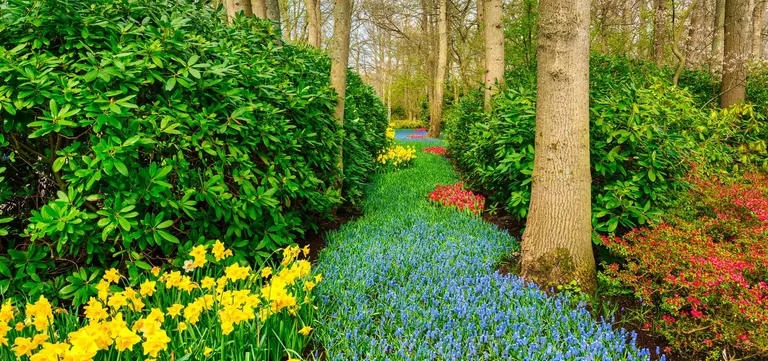
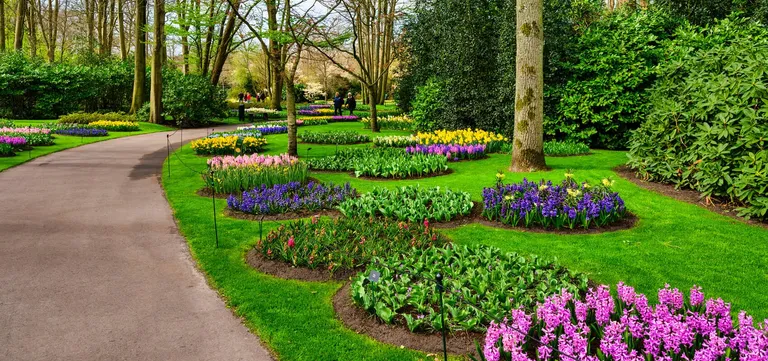
The heart of the park, and where most of the photographs you’ve seen were taken: winding paths through beds where tulips, hyacinths, daffodils and muscari are planted in drifts of deliberate colour, with sculptures set among them. It’s where Keukenhof stops being a collection of pavilions and becomes a single composition.
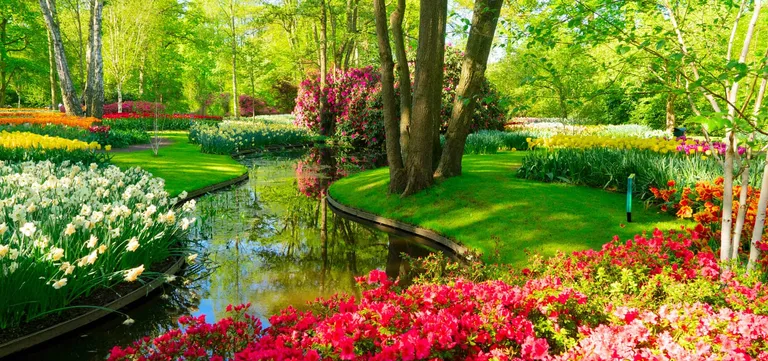
Look for the smaller Inspirational Gardens dotted nearby — themed plots showing what the same bulbs look like in a domestic garden, which is quietly the most useful thing here if you grow anything at home.
5. Beatrix Pavilion
A complete change of register: a warm indoor room given over to orchids and anthuriums, hundreds of varieties in shapes and colours the outdoor beds never attempt. Named for Queen Beatrix, it’s accessible for wheelchairs and strollers, and there are restrooms, a café and a shop attached.
Give it half an hour at least. After hours of massed tulips, the intricacy is a genuine palate-cleanser.
6. Wilhelmina Pavilion and the lake
Beside the large pond near the original entrance, the Wilhelmina is primarily a self-service restaurant — but its terrace, looking out over the water with swans on it, is the best seat in the garden. Hot meals, salads, sandwiches and coffee; no reservations, so at peak times a terrace table takes patience.
The ornamental lake beside it is the park’s calm centre: the musical fountain, lakeside boardwalks, and benches under trees. If you only sit down once at Keukenhof, sit here.
Practical notes: vegetarian, vegan and some gluten-free options are marked (ask staff about cross-contamination; the widest range is at Jacoba’s Kitchen in the Oranje Nassau). Staff will warm baby food, and high chairs and changing facilities are available. First Aid is nearby.
7. Juliana Pavilion and Tulpomania
The oldest pavilion in the park, named for Queen Juliana, who was the garden’s patron from its public opening in 1950 — and the one place where Keukenhof explains itself. The Tulpomania exhibition traces the tulip from the mountains of Central Asia to the Dutch Golden Age, and through the extraordinary speculative bubble of the 1630s, when single bulbs changed hands for the price of a canal house before the market collapsed.
It’s an exhibition space rather than a flower show, and it changes what you see outside: seven million bulbs read differently once you know what people once paid for one. Pair it with the adjacent Historical Garden, which grows heirloom varieties from the same era.
Beyond the garden: bulb fields, a castle and Zaanse Schans
Keukenhof is half a day. The region around it is what turns the trip into a proper day out — and unlike the garden, most of it is free.
The bulb fields begin immediately outside the gates and are the reason the whole area exists: commercial flower farms laid out in stripes of solid colour, at their most extraordinary in the second half of April. Cycling is the way to see them — bikes aren’t allowed inside Keukenhof, but rental is easy near the entrance and in Lisse, Leiden and Noordwijk, and dedicated flower-field sites like the Tulip Barn at Hillegom and the Tulip Experience at Noordwijkerhout welcome photographers. The one rule everyone should know: the fields are working farms, so stay on the paths and never walk into the rows.
Kasteel Keukenhof, a six-minute walk from the garden, is the 17th-century estate the garden is named after — and its grounds are free to enter. Sculptures among the woodland, laid-out walking paths, a restaurant, a playground and farm animals make it the obvious relief valve for families after a morning of not touching the flowers. Guided tours and events carry a charge; wandering the grounds does not.
Zaanse Schans, about an hour north on the Zaan River, is the other trip worth adding, and our film gave it real time. It’s an open-air museum of working windmills — mills that still grind pigment, saw timber and press oil, with millers who will explain exactly how a 17th-century machine automates a job — alongside the country’s largest clog workshop, where you can watch a block of poplar become a wooden shoe in minutes. It’s the industrial half of Dutch heritage that the flowers make you forget.
Useful Links & Resources
- Keukenhof official site: keukenhof.nl — dates, tickets and the live flowering report
- Keukenhof Express & combi-tickets: keukenhof.nl/en/ov
- Kasteel Keukenhof: kasteelkeukenhof.nl
- Zaanse Schans: dezaanseschans.nl
- Dutch rail (NS): ns.nl
- Public transport planner: 9292.nl
Guide updated August 2026. The 2027 season dates are official; prices describe the 2026 season and were verified against official and operator listings at the time of writing — 2027 tickets go on sale in mid-October 2026. Always confirm before booking.
We hope this guide — the written companion to our film Keukenhof: The Ultimate Guide to the World’s Most Beautiful Tulip Garden — helps you land in the right week rather than merely the right month. Come at opening, walk the garden before the coaches arrive, climb the windmill for the fields, and give the bulb region an afternoon of its own.
Now it’s your turn: pick your week, book your slot, and step into eight weeks of colour that took a year to plant. Happy travels!
Our Photography Portfolio
The photographs in this guide were captured while filming our Keukenhof documentary. To license these images — or explore thousands more from nearly three decades behind the camera — find our portfolios on the major stock platforms:
- Shutterstock: Shutterstock Portfolio
- Adobe Stock: Adobe Stock Portfolio
- Getty Images / iStock: Getty Images Portfolio
Frequently Asked Questions
When is Keukenhof open in 2027?
- Keukenhof's 2027 season runs from 18 March to 9 May — about eight weeks, as every year. The gardens open daily from 08:00 to 19:00, with the last entry at 18:15. The garden is closed for the rest of the year: it exists only for the Dutch spring, which is why the dates shift slightly each season and why booking early matters.
When do the tulips peak at Keukenhof?
- Mid to late April, in most years. The season opens with crocuses, hyacinths and daffodils through late March, the first tulips arrive right at the end of March, and the tulip beds and surrounding bulb fields hit their fullest around the third and fourth weeks of April. Early May brings the late tulips, alliums and the indoor Lily Show. Bloom follows the weather, so check Keukenhof's official flowering report in the week before you travel.
How much does Keukenhof cost?
- In 2026 entry was €21.50 for adults and €10 for children aged 4–17, with under-4s free; parking ran €10–15 a day and was cheaper booked online with your ticket. Prices for the 2027 season go on sale in mid-October 2026 and are usually close to the previous year's. Combi-tickets bundling entry with the Keukenhof Express bus cost roughly €33.50–38.50 in 2026 depending on the departure point.
How do you get to Keukenhof from Amsterdam?
- The Keukenhof Express bus is the simplest route: line 852 from Amsterdam RAI takes about 35 minutes, and a combi-ticket bundles the return fare with your garden entry. From Schiphol there are direct shuttles of about 30 minutes; line 854 runs from Leiden Centraal, 850 from Haarlem and 859 from Hoofddorp. By car it's roughly 40 km and 45 minutes from central Amsterdam, but traffic around Lisse is heavy at weekends in peak season.
How long do you need at Keukenhof?
- Three to five hours covers the 32-hectare garden comfortably — the pavilions, the windmill, the ornamental lake and the main flower beds, with time to sit. Make it a full day if you want to add the whisper boat through the bulb fields, cycle the flower farms outside the gates, or walk over to Kasteel Keukenhof. Arriving at opening and leaving after lunch is the pattern most visitors settle into.
How do you avoid the crowds at Keukenhof?
- Come on a Monday, Tuesday or Wednesday, and arrive before 10:30 or after 16:00 — the tour coaches fill the middle of the day. Avoid the Flower Parade weekend (17–18 April in 2027), Easter, Dutch school holidays and King's Day on 27 April, all of which sell out months ahead. The garden is at its calmest in the first hour after opening, which is also the best light for photographs.
Do you need to book Keukenhof tickets in advance?
- Yes. Tickets are sold online for specific arrival time slots and popular days sell out well ahead, so booking is effectively required rather than merely advisable. Booking also lets you add discounted parking or a combi-ticket with the Express bus at the same time. Note that the whole park is cashless — cards only, with a single ATM inside.
What is there to do near Keukenhof?
- The bulb fields immediately outside the gates are free to see and best explored by bike; Kasteel Keukenhof, a 17th-century castle whose grounds are free to enter, is a six-minute walk away; and Zaanse Schans, about an hour north, preserves working windmills, a clog workshop and the Netherlands' industrial past. The village of Lisse and the wider bulb region reward an unhurried afternoon.
Can you still see flowers at Keukenhof if the weather is bad?
- Yes — that's what the pavilions are for. The Oranje Nassau hosts flower shows that change weekly, the Willem-Alexander is the largest indoor space and runs displays all season including the closing Lily Show, and the Beatrix keeps a warm, tropical collection of orchids and anthuriums. Dutch spring weather is unpredictable, so dress in layers and treat the pavilions as your shelter.